Share Ann Wellington Alexander's obituary with others.
Invite friends and family to read the obituary and add memories.
Stay updated
We'll notify you when service details or new memories are added.
You're now following this obituary
We'll email you when there are updates.
Select your format and elements to print

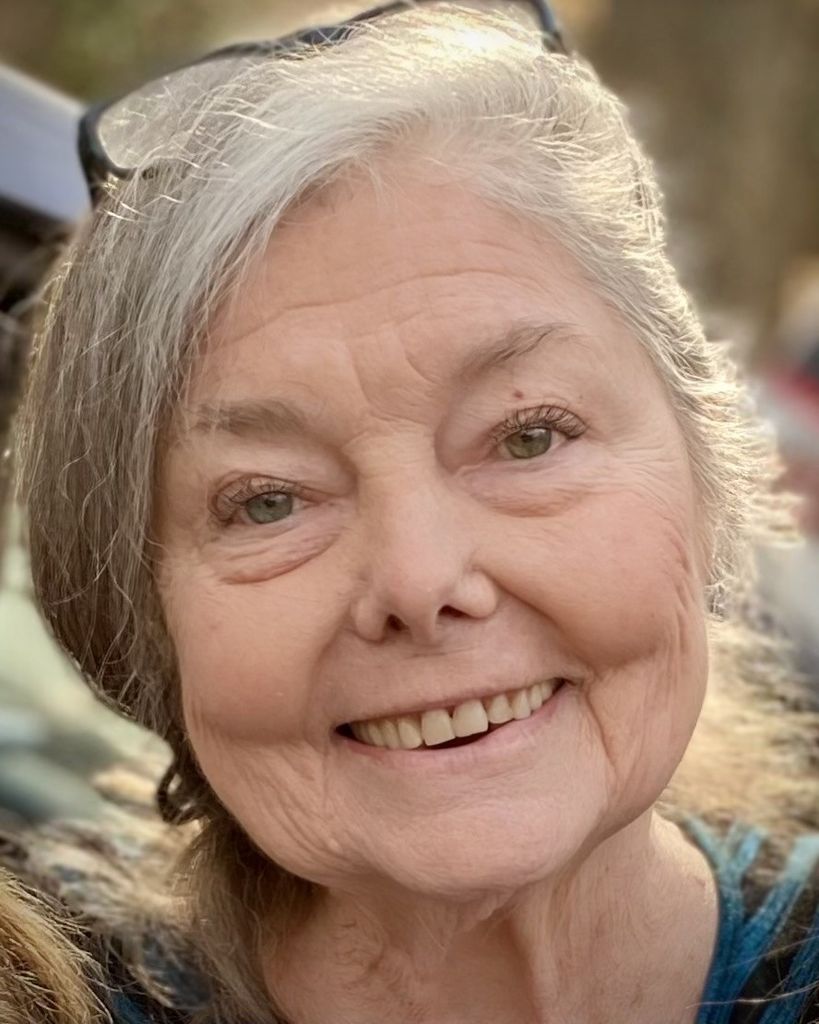


Ann Wellington Alexander
Feb 7, 1941 — Dec 31, 2025
Chapel Hill, NC
Ann Wellington Alexander, MD, died peacefully surrounded by her family on December 31, 2025, at the age of 84. Throughout her life, and right up to the end, Ann never met a stranger. From the young children and parents who came through her clinic doors to guests in her home to brief encounters with someone in an elevator, she had a remarkable ability to form genuine human connections. People felt seen, heard, and valued in her presence.
Ann radiated a childlike sense of wonder that endeared her to so many. She was a stubborn optimist, incredibly humble and brought the party wherever she went. With a twinkle of mischief in her eye, she often delighted in wholesome rule bending, such as sneaking cookies, staying up past bedtime with her grandchildren and starting spontaneous dance parties anywhere and everywhere. Even during tough times, she brought laughter and hugs, freely sharing an abundance of joy, and her irreverent sense of humor, along with a remarkable knack for finding silver linings in every challenge. One of her favorite quotes was, “Other than that, Mrs. Lincoln, how was the play?”
Ann approached complex problems with determination, convinced that if she asked the right questions, she could get to the bottom of things and find a solution—and more often than not, she did. Ann loved working in teams and had an unshakable belief in the goodness of people. With a warm, generous heart and an exceptional mind, she inspired others to be the best versions of themselves. Ann would be the first to tell you she had a cherished childhood and a long, remarkable life full of adventure.
Family
Ann is survived by her husband and soulmate of 60 years, James Alexander, MD; her three daughters, Kelly Booth (husband Julien, children Nora and Anna), Kathryn Alexander (husband Eli Margolese-Malin, children Ava and Max), and Kimberly Maslow (husband Gary, children Zoe and Maya); along with her siblings, Don Wellington and Jane Lawyer, and multiple nieces and nephews. She was preceded in death by her parents, Frederick and Bertha Wellington, and by her siblings, Lynne Fraunheim, Bob Wellington, and Rick Wellington and her grandson, Zander Maslow.
Early Life and Education
Ann was born in 1941 in Sarnia, Ontario. Soon after, her family moved to Colombia, where she was raised as the oldest of six children in a lively and close-knit household. Her formative years in South America, rich in language, culture, and community, shaped her worldview and her deep appreciation for human connection. It was in Colombia that Ann fell in love with cumbia music. Up until her final days, she could not resist shimmying a shoulder when her daughters played cumbia for her. At the age of 13, she returned to Canada to attend boarding school at Ontario Ladies’ College, followed by Dickinson College in Pennsylvania, where she excelled academically and delighted in being a water ballerina.
In 1962, Ann enrolled at Duke University School of Medicine as one of only three women in her class, graduating in 1966. It was at Duke that she met Jim, the love of her life and her lifelong partner. They married in 1965 and went on to support one another through extraordinary careers, Jim as a heart surgeon and Ann as a trailblazing neurodevelopmental pediatrician. Ann remained at Duke for her pediatric residency and a fellowship in developmental-behavioral pediatrics. Together, they made their home in Gainesville, Florida, where they spent much of their professional lives. Ann and Jim were tireless advocates for their patients, their family, and anyone who needed help, never turning away from a challenge or a seemingly impossible problem.
Professional Legacy
Dr. Ann was, at heart, a thinker and a teacher. She was deeply involved in medical student education and physician assistant training at Duke and later trained pediatric nurse practitioners at the University of Florida. She believed passionately in learning together across disciplines and devoted herself to mentoring psychologists, occupational therapists, speech-language pathologists, educators, and physicians. In 1986, her book Your Child: Birth to Age 6 was published, offering practical and compassionate guidance to parents, reflecting her belief that early development matters profoundly.
Ann’s life’s work focused on understanding early brain development to create effective treatments for dyslexia and other neurodevelopmental differences. This vision led to the founding of the Morris Center in Gainesville in 1986. Under her leadership, the Morris Center received federal research grants from the National Institute of Child Health and Human Development (NICHD). Dr. Ann served as the Principal Investigator on two NICHD-funded grants that scientifically evaluated the long-term efficacy of intensive reading interventions for children with dyslexia. These studies examined both immediate and sustained outcomes and helped establish a strong scientific foundation for the work. In 2005, the Gainesville Sun reported that, “with a near-perfect success rate, the center had been credited with changing the lives of more than 700 people from across the country.”
Building on this work, Ann founded the Wellington-Alexander Center in Scottsdale, Arizona, in 2003. At the Wellington-Alexander Center, she replicated and expanded upon the transdisciplinary model she had developed at the Morris Center, integrating developmental pediatrics, speech-language pathology, occupational therapy, psychology, and education into a cohesive and child-centered approach. Rather than treating isolated symptoms, Ann believed in addressing the whole child and the foundational language systems that support learning, regulation, and confidence. Over the years, hundreds of children and families have been profoundly impacted by this model. Children who struggled at school now thrived and discovered their strengths, found their voices, and learned to read, write, and learn with confidence. Just as importantly, parents found understanding, hope, and partnership.
As part of her commitment to prevention and early intervention, Ann and the Wellington-Alexander Center team developed and disseminated a preschool language program designed to strengthen the foundations of oral language before children ever encountered reading failure. This work extended her impact beyond the clinic into schools and communities, shaping how educators think about early language, literacy, and development.
Personal Life
Despite her many professional achievements, Ann’s greatest joy came from her family. In 2012, Ann and Jim moved to the Durham/Chapel Hill area to be closer to their kids and grandchildren. She was cherished by her husband, Jim, her daughters, and her six grandchildren, who frequently climbed into her bed for sleepovers filled with heart-to-heart talks, old sitcoms, laughter, and endless snuggles. Ann had a knack for long phone conversations, often checking in on her siblings, their children, and friends, always ready to offer guidance.
Given Ann’s gift for storytelling, it feels most fitting to let her describe her life’s work in her own words, which she wrote to share with her grandchildren:
Once upon a time I was a little girl, and I went to school in a one room schoolhouse in an oil camp in the jungles of Colombia, South America. In second grade, I would overhear all the children learning to read and notice some of the kids struggling to sound out words in English. As I grew up, I wanted to help the kids who were struggling to read so I set up a little classroom in a vacant house where I would tutor kids who had these struggles and realized how very difficult it was for them to be able to sound out words. They were very smart and they could memorize the words, but they couldn’t sound them out. And I noticed they had trouble speaking Spanish like the other kids as well. Why? This experience set me on a lifelong journey to try and uncover the answer to my question.
At age 9, I knew I wanted to be pediatrician at Duke because I had seen a Time magazine article about medicine and mission work. In high school, sciences and languages were my favorite subjects. In college, I took premed classes, and I entered Duke medical as one of the three women in my class. I met my husband in medical school. He was brilliant, at the top of our class, but I noticed he had terrible handwriting. Once we married, I realized he could hardly read! He was just blessed with a photographic memory. To read half a page in Time magazine took him almost over an hour. I learned about dyslexia up close and personal…
Around that time, I also realized my father had mild dyslexia, and that is why he never wrote me letters while I was in boarding school in Canada, away from home. After I finished my pediatric residency, I did a fellowship in neurodevelopmental pediatrics where I began to answer to my question as to why dyslexia happens.
When a baby is born, the caregiver talks to the baby, and the baby looks at the caregiver. The caregiver speaks “motherese”. The baby likes the tone and looks at the caregiver’s mouth and sees how his/her mouth is moving when sounds are made. Both the sound and vision wire together in the baby’s brain. Sometimes the wiring can become fuzzy because it is not distinct. Training the sound and vision to wire together is the foundation for learning language, and the key to understanding and treating dyslexia.
Ann Wellington Alexander’s legacy lives on in her family and friends, in the colleagues she mentored, in the centers she built, and most of all in the thousands of children whose lives were changed because she refused to accept that struggling readers could not succeed.
Ann inspired many, helped even more, and was deeply loved by all who knew her. A memorial service and celebration of life reception to celebrate her life will be held on March 21, 2026, at 2 PM at Goodson Chapel on the Duke University campus, located at 407 Chapel Dr, Durham, NC 27708. All friends and family are welcome to join us in celebrating and remembering Ann, reception to follow. In lieu of flowers, donations in honor of Ann’s life’s work may be made to https://url.avanan.click/v2/r01/___https://www.gofundme.com/f/honoring-dr-anns legacy-dyslexiaprevention Funds will support bringing prevention programming to more families and communities, with a focus on reducing the risk of dyslexia in preschool-aged children.
Service Schedule
Past Services
Guestbook
Visits: 1633
This site is protected by reCAPTCHA and the
Google Privacy Policy and Terms of Service apply.
Service map data © OpenStreetMap contributors